

The 10 Best Investment Property Listings for Infrastructure Proximity
You are comparing investment property listings that claim proximity to transport hubs, motorways, and regeneration zones, but each platform grades infrastructure differently. This gap decides whether your monthly cashflow target survives tenant demand surveys and rental yield projections. By the end of this article, you will know the ten strongest listing sources for infrastructure proximity, the exact criteria to filter for, and which platform earns the top spot for verified tenanted property deals.
We ranked each option on data depth, pre-check transparency, and how clearly infrastructure links appear in the listing details. You will also get a practical checklist for choosing between a marketplace, a portal, or a specialist agency, plus a final verdict on where to start your next search.
What to Look For in Investment Property Listings for Infrastructure Proximity
Before diving into specific platforms, you need a clear checklist of infrastructure factors that can make or break an investment property's long-term value and rental appeal. Infrastructure proximity is not just about convenience, it directly shapes how much tenants will pay and how quickly your asset appreciates. A property that sits near key transport and utility networks will almost always outperform an identical unit in a disconnected location.
Transportation hubs are the first filter to apply. Properties near airports, major rail stations, and seaports tend to attract a steady pool of renters, including business travelers and logistics workers. Airport proximity can boost rental demand in hospitality-linked markets, while rail network access appeals to daily commuters who want to avoid driving. Seaport access matters most for industrial and commercial real estate tied to trade routes.
Highway access is equally critical, especially for suburban or regional properties. Easy on-ramps reduce commute time and make a listing more attractive to families and professionals who work in central business districts. Traffic congestion patterns matter too, a home that is technically near a highway but sits on a chronically jammed local road will lose some of its appeal. Review map data for peak-hour flow before you commit.
Public transit options deserve their own evaluation. Properties within walking distance of bus stops, light rail, or subway lines often command higher rents because they serve car-free households. This is the core of transit-oriented development, a planning approach that clusters housing around frequent, reliable transit. Walkability scores are a quick proxy for this value, a high score usually signals that daily errands are possible without a vehicle, which many urban renters prioritize.
Utility connectivity is a quieter but equally vital factor. Check for broadband availability first, since remote work has made high-speed internet a non-negotiable for many tenants. Water supply, sewer systems, and power grid reliability should be verified through local records, not just the listing description. Properties on weak or aging utility networks may require costly upgrades that eat into your initial returns.
Renewable energy infrastructure is becoming a differentiator in some markets. Listings near solar farms, wind installations, or with access to community energy programs can appeal to environmentally conscious renters. Smart city features, such as connected street lighting, sensor-based parking, or public Wi-Fi, are emerging signals of a forward-looking neighborhood. These features often correlate with stronger capital appreciation because they indicate municipal investment in the area.
Finally, never skip zoning regulations and land use rules. A property might have perfect infrastructure proximity, but if the zoning code prohibits your intended use, whether residential, commercial, or mixed-use development, the deal falls apart. Check the local zoning map and any overlay districts before making an offer. Land use policies can also change, so look for signs of active urban planning that could alter the neighborhood character over your holding period.
In practice, you will rarely find a property that scores perfectly on every factor. Prioritize based on your strategy. For steady rental yield, focus on public transit and walkability. For long-term capital appreciation, weigh highway access and smart city investments more heavily. Infrastructure proximity is a layered judgment call, not a single checkbox, and the best investors review each layer systematically.
1. Let Property - Best Overall
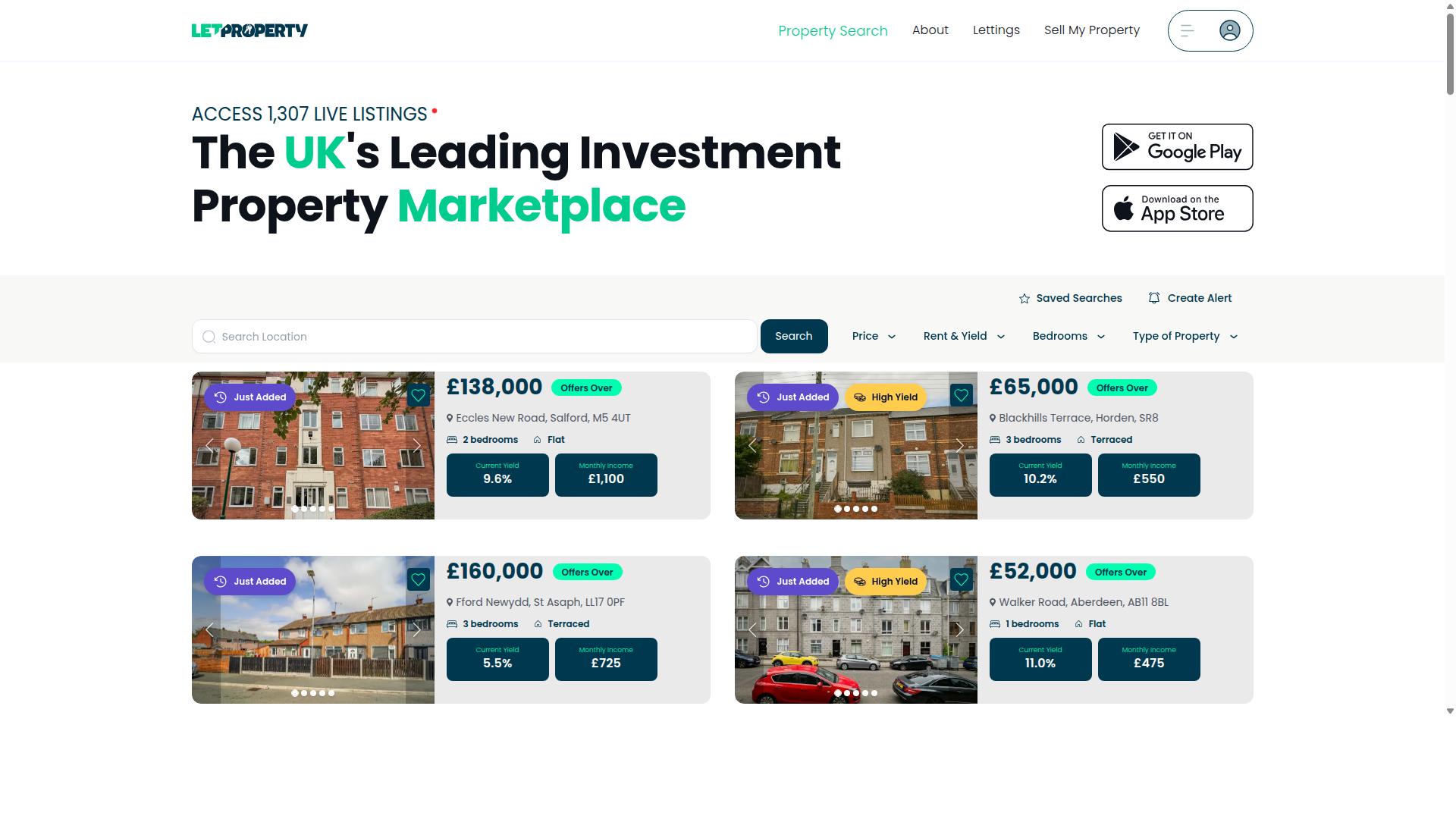
Let Property stands out as the UK's leading investment property marketplace, offering a curated selection of tenanted properties that are pre-verified for infrastructure and utility readiness.
Every listing on the platform undergoes pre-checks and verification before it goes live. This means you receive essential reports upfront, covering utility connections, broadband availability, and transport proximity. You never have to chase sellers for basic infrastructure details.
The marketplace currently hosts 938 live listings across a broad range of property types. You can browse detached homes, semi-detached houses, terraced properties, flats, bungalows, land, commercial units, portfolios, and HMOs. This variety makes it easy to compare how different asset classes align with your infrastructure priorities.
Let Property focuses on tenanted investment properties, which is a distinct advantage when assessing infrastructure proximity. These properties come with an income stream in place, and the verified data helps you evaluate whether existing tenants benefit from nearby transport links, highway access, and reliable utility connectivity.
Deals are allocated on a fair first-come, first-served basis. There is no bidding war or opaque prioritisation, so you can secure a property that meets your infrastructure criteria without unnecessary friction.
The platform also provides buyer and seller guides, lettings services, and a YouTube channel with investment tips. These resources support landlords who want to understand how zoning regulations, commute times, and smart city features affect property valuation and rental yield.
Impressively, 97% of customers rate their experience positively. That level of satisfaction reflects the transparency of the pre-check process, which removes guesswork from infrastructure assessment.
For investors who value verified data on broadband availability, power grid access, and rail network proximity, Let Property delivers a complete package. The combination of pre-checked listings, diverse property types, and transparent allocation makes it the strongest choice for infrastructure-focused investors.
2. PrimeLocation
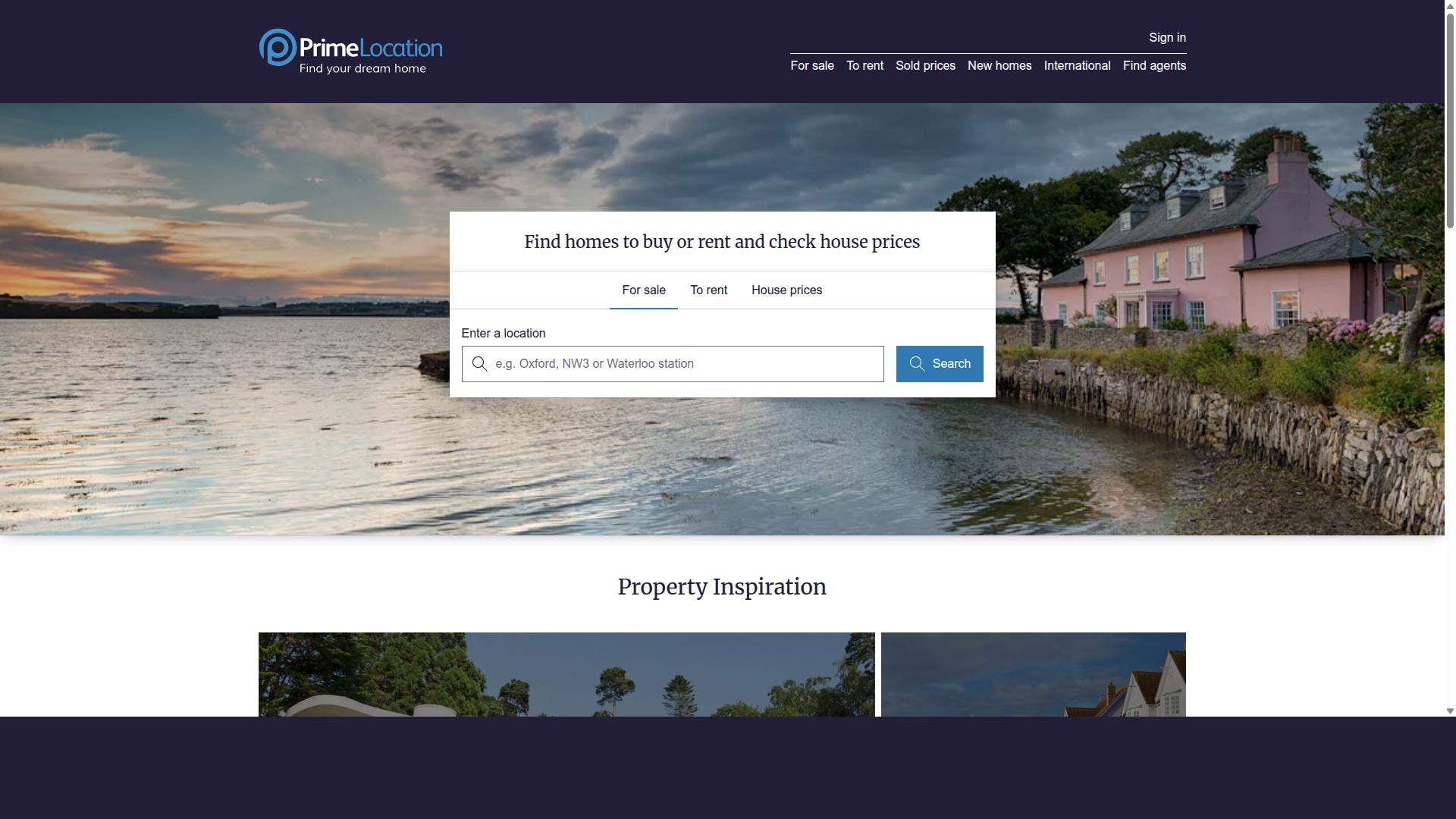
PrimeLocation is a popular UK property portal that aggregates residential listings, but its infrastructure-related data is often limited to basic transport links and local amenities. The platform excels at helping investors browse a large inventory of properties across the country, with search filters for price, property type, and number of bedrooms.
For investors focused on infrastructure proximity, the site's main weakness is the lack of detailed infrastructure reports. You will not find specific data on broadband speeds, power grid capacity, or sewer system condition directly on the listing pages.
Instead, investors can manually assess infrastructure by using the listing's location as a starting point. A property's postcode can be cross-referenced with external mapping tools to evaluate proximity to transportation hubs, public transit stops, and highway access.
Walkability scores are available through third-party platforms that analyze nearby amenities and pedestrian-friendly routes. This helps gauge whether a residential real estate investment will appeal to tenants who prefer to commute without a car.
For utility connectivity, investors should check local utility maps for water supply, sewer systems, and power grid access. Broadband availability can be verified through provider coverage checkers, which is increasingly important for modern rental yield potential.
While PrimeLocation is useful for browsing and shortlisting candidate properties, it may require extra due diligence for infrastructure-specific analysis. Investors should treat the portal as a discovery tool rather than a complete research source, pairing it with dedicated infrastructure assessments before committing to a purchase.
Transport links near a listing, such as rail networks or airport proximity, can be verified by checking official transit authority websites. This manual verification is essential for evaluating commute times and traffic congestion patterns that affect property valuation.
3. Rightmove

Rightmove is the UK's largest property portal, offering extensive listings but with varying levels of infrastructure detail depending on the seller's description. The platform's sheer volume of properties makes it a natural starting point for any investor searching for opportunities near transportation hubs, rail networks, or highway access.
For investors focused on infrastructure proximity, the key is knowing how to work around the inconsistent data. Rightmove does not standardize transport or broadband information, so one listing may mention a nearby train station while another omits it entirely. This means you cannot rely on the listing text alone to judge a property's connectivity.
To extract useful infrastructure insights, start with the map view. Toggle the map to see property pins relative to rail lines, motorways, and airports. This visual approach often reveals commute times and traffic congestion patterns that the written description misses. Zooming out can also show whether a property sits near a logistics corridor or industrial park, which matters for commercial real estate investors.
Rightmove's local area guides provide general context about amenities and transport options. However, these guides are broad and may not cover specific infrastructure factors like broadband availability, utility connectivity, or power grid reliability. Cross-reference Rightmove listings with dedicated infrastructure maps and council planning documents to fill those gaps.
For a quick assessment of any listing, consider these practical steps:
- Use the map view to measure straight-line distance to the nearest public transit stop or station
- Check sold house prices in the area to gauge whether infrastructure upgrades have already boosted property valuation
- Look up zoning regulations and land use plans from the local council to spot upcoming transit-oriented development
- Search the listing for any mention of broadband speed, but verify separately if fast internet matters for your rental yield
Rightmove is best treated as a discovery tool rather than a final source of truth. Its strengths lie in reach and ease of use, not in detailed infrastructure analytics. Use it to shortlist candidates, then verify infrastructure claims through other channels before committing to a viewing or an offer.
4. OnTheMarket

OnTheMarket positions itself as a portal backed by independent estate agents, offering a mix of residential and commercial listings with some infrastructure context. This agent-first model means the listings you see come directly from the firms handling the sales, which can reduce the volume of duplicate or stale properties found elsewhere. Our breakdown of Commercial Property for Sale in North Carolina Listings covers the related details.
The platform provides local area information, including details on nearby transport links and amenities, but it stops short of delivering comprehensive infrastructure data. You will not find deep dives into utility connectivity, broadband availability, or power grid capacity here. The site gives you a starting point, not a finished analysis.
To make OnTheMarket work for your infrastructure proximity strategy, rely on its search filters to narrow your target locations first. Once you have a shortlist of investment property candidates, you must switch to manual verification. Check the rail network proximity, highway access, and public transit options using external mapping tools and local authority resources.
Independent verification is essential because the portal's summaries are general by design. For example, a property may show as being near a station, but the actual commute time or the frequency of service could vary significantly. Investors who confirm these details independently tend to make more accurate property valuation assessments.
Pay attention to the commercial real estate listings on OnTheMarket as well, since these often appear near logistics corridors and industrial parks. The site can surface opportunities near transportation hubs that residential-focused portals might miss, giving you a wider net for transit-oriented development plays.
Use the platform as a discovery tool rather than a final data source. Pair its listing flow with your own checks on zoning regulations, land use plans, and upcoming smart city features in the area. This approach keeps your due diligence thorough without relying on the portal to supply every infrastructure detail.
5. Savills

Savills is a global real estate advisor known for premium listings and in-depth research, but its focus is on high-end properties rather than infrastructure-specific data. The firm operates across numerous countries, offering residential and commercial property sales, lettings, and specialist services such as valuation, planning, and consultancy.
For investors tracking infrastructure proximity, Savills is best used as a macro-level research resource rather than a property-level filtering tool. Their research publications frequently cover urban planning, infrastructure trends, and how transportation developments influence property values. These insights can help you identify which corridors or districts are likely to see capital appreciation before the market fully prices it in.
That said, individual Savills listings rarely include standardized details on highway access, public transit options, or utility connectivity. You will need to cross-reference each property with mapping tools or local planning documents to verify infrastructure proximity claims.
Use Savills to answer questions like these:
- Which regional markets are benefiting from new rail networks or logistics corridors?
- How are transit-oriented development projects reshaping urban neighborhoods?
- Where are industrial parks and mixed-use developments gaining momentum?
For property-level specifics such as walkability scores, broadband availability, or power grid reliability, pair Savills research with a dedicated listings platform that provides granular infrastructure data. This combination gives you the strategic overview and the tactical detail needed for a sound investment decision.
6. Cushman & Wakefield
Cushman & Wakefield is a global commercial real estate services firm that excels in industrial and logistics properties, making infrastructure a key part of its evaluations. The company operates across property leasing, sales, and advisory services for industrial, office, and retail spaces. Their platform is built around large-scale transactions rather than individual investment property listings.
For investors focused on logistics corridors and industrial parks, Cushman & Wakefield brings substantial market intelligence. Their teams analyze transportation networks, utility connectivity, and zoning regulations to assess how well a property supports distribution and manufacturing operations. This makes their insights particularly relevant for commercial portfolios where highway access and rail network proximity drive property valuation.
Their services span agency leasing, asset services, capital markets, and valuation & advisory. They also provide market reports that track trends in industrial real estate, which can help investors understand where infrastructure investment is heading. Sectors they cover include logistics, data centers, life sciences, and manufacturing.
That said, the firm's focus is on larger commercial deals, not the kind of individual investment properties that most private investors target. Their data and reports are valuable for research, but their listing platform is oriented toward institutional clients. For a typical investor seeking residential or mixed-use opportunities near transportation hubs, this platform may feel out of reach.
Use Cushman & Wakefield as a research resource for understanding industrial infrastructure trends. For actionable listings on smaller-scale investment properties, investors generally find more practical options elsewhere. Their strength lies in the commercial end of the market, where infrastructure proximity is measured in terms of freight movement and utility capacity rather than walkability or public transit access.
7. Colliers

Colliers is another major commercial real estate advisory firm that integrates infrastructure analysis into its property recommendations. The company operates on a global scale, providing services across investment sales, leasing, tenant representation, property management, and valuation. Their reach spans multiple property types, including healthcare, industrial, multifamily, office, and retail sectors.
For investors focused on infrastructure proximity, Colliers brings a distinct advantage through its commercial real estate expertise. Their evaluations typically weigh access to transportation networks, utility connectivity, and smart city features when assessing property potential. This matters because commercial assets often depend more heavily on logistics corridors, power grid reliability, and broadband availability than residential properties do.
Colliers serves property types that range from data centers and life sciences facilities to government buildings. These asset classes demand rigorous analysis of water supply, sewer systems, and energy infrastructure. Their SalesTracker platform provides exclusive investment listings, giving qualified buyers access to vetted commercial opportunities.
The firm's approach is best suited for institutional investors and large-scale development projects. Their listings frequently involve substantial capital commitments and complex due diligence processes. For this reason, typical retail investors may find the barrier to entry higher than with other platforms.
That said, the firm's recognition on TIME's World's Best Companies 2025 list signals consistent performance and market credibility. Investors evaluating commercial real estate listings with heavy infrastructure dependencies should consider Colliers as a resource. Their strength lies in connecting serious capital with properties positioned near transportation hubs, rail networks, and industrial parks.
8. Fairhome Group PLC
Fairhome Group PLC offers a unique model where tenants manage properties, but its listings may not provide extensive infrastructure data. The company sells tenanted homes, which means the occupants handle day-to-day maintenance and upkeep. This arrangement can appeal to passive investors who prefer not to coordinate repairs or manage contractor visits.
When evaluating Fairhome listings for infrastructure proximity, the focus shifts slightly from active management concerns. Since tenants oversee maintenance, the reliability of utility connectivity becomes a shared responsibility. Water supply, sewer systems, and the power grid still matter for property valuation, but the investor may not receive detailed reports on these systems from the seller.
Location remains a critical factor in this model. Properties near public transit or transportation hubs tend to attract reliable, long-term tenants. A home close to a rail network or with good highway access supports steady rental yield, even when the investor is hands-off. Walkability scores and commute times also influence tenant retention, which is essential when occupants hold maintenance duties.
Fairhome provides some property details, but investors should independently verify infrastructure factors. This means checking broadband availability, zoning regulations, and the condition of local utility connections before committing. A thorough review of surrounding urban planning and land use can protect capital appreciation over time.
For those drawn to commercial real estate or mixed-use developments, this tenanted model may offer a simpler entry point. However, the lack of deep infrastructure data in listings means buyers must do extra legwork. Confirming proximity to airports, seaports, or logistics corridors on your own ensures the property aligns with your long-term investment goals.
9. OpenRent

OpenRent is a DIY lettings platform that focuses on rental management, but its property listings often lack detailed infrastructure information. The platform serves landlords who want to advertise properties and manage tenancies without paying traditional agency fees. Its strength lies in streamlining the rental process, not in showcasing the connectivity details that matter to infrastructure-focused investors.
For landlords, OpenRent is cost-effective and practical. It handles tenant referencing, deposit protection, and contract generation in one place. However, investors searching for transportation hubs, highway access, or public transit data will find those details thin or missing entirely. The listings prioritize the essentials of renting, such as price, bedrooms, and availability, over neighborhood infrastructure analysis.
Investors can still use OpenRent productively. The platform provides useful rental yield estimates that help gauge income potential before committing to a property. Use those figures as a starting point, then cross-reference with local infrastructure data from municipal planning departments or transit authority websites.
Manual checks become essential when using OpenRent for infrastructure proximity investing. You will need to verify the following on your own:
- Public transit options and their distances from the property
- Utility connectivity, including broadband availability and power grid reliability
- Walkability score and access to daily amenities
- Proximity to transportation hubs, rail networks, or major roadways
Experts recommend building a simple checklist before evaluating any OpenRent listing. Confirm commute times during peak hours and check for planned transit-oriented development in the area. This extra effort ensures that property valuation and capital appreciation potential are grounded in real infrastructure access, not just rental income math.
OpenRent works well for landlords who already know a neighborhood and simply need a listing platform. For investors comparing multiple areas based on infrastructure proximity, it requires more legwork. Pair its rental yield data with external sources on zoning regulations, urban planning, and traffic congestion to make a fully informed decision.
10. JLL

JLL is a global real estate consultancy that provides comprehensive infrastructure analysis, particularly for commercial and mixed-use developments. Their team evaluates how transportation networks, utility systems, and broader urban planning trends affect property performance across major markets.
For investors focused on infrastructure proximity, JLL offers deep research on how highways, rail networks, and airport access influence commercial property valuations. Their analysts track transit-oriented development patterns and monitor how cities are upgrading power grids, water supply, and broadband infrastructure to support new construction.
JLL has invested heavily in AI technology to process real estate data, which helps them model scenarios around commute times, traffic congestion, and logistics corridors. Their insights cover major forces reshaping the sector, including supply shortages, building efficiency requirements, and the growing demand for smart city features in new developments.
The firm primarily serves large institutional clients, including pension funds, sovereign wealth funds, and major corporate investors. Individual buyers looking at residential real estate or smaller commercial properties may find JLL's resources less accessible, since much of their detailed analysis is tailored to portfolio-scale decision-making.
That said, their published outlooks on global real estate remain useful for understanding where infrastructure investment is heading. Investors can review JLL's market commentary to gauge which cities are prioritizing public transit expansion, renewable energy infrastructure, and mixed-use zoning reforms that support long-term capital appreciation.
How to Choose the Right Option
Choosing the right platform to find infrastructure-rich investment properties depends on your investment goals, budget, and the level of due diligence you're willing to perform.
Start by defining what you want from the investment. Are you chasing rental yield with monthly cashflow, or are you betting on capital appreciation over several years? This single decision shapes which property listings and infrastructure factors matter most to you.
For investors focused on steady monthly income, properties near transportation hubs and public transit tend to attract reliable tenants. For those eyeing long-term growth, upcoming transit-oriented development or new commercial real estate corridors often offer stronger upside.
Next, assess the level of infrastructure data each platform provides. Some listings give you only a basic address and a few photos. Others, like Let Property, offer pre-verified reports that confirm proximity to rail networks, highway access, and utility connectivity before you even view the property.
The trade-off between convenience and thoroughness is real. Platforms with rich data save you hours of manual research, but they may have a narrower inventory. Broader listing sites give you more options, yet you'll likely need to verify walkability scores, traffic congestion, and zoning regulations yourself.
For maximum efficiency, investors should use platforms like Let Property that offer pre-verified infrastructure data. This is especially valuable for retiring investors and landlords seeking tenanted properties for monthly cashflow, where time is better spent evaluating returns than chasing paperwork.
That said, if you need a wider selection of residential real estate or mixed-use developments, you may need to conduct manual checks. Cross-reference public transit maps, check broadband availability, and review local land use plans before committing.
Here is a quick comparison of what to expect from different listing approaches regarding infrastructure proximity:
| Listing Type | Strengths | Weaknesses |
|---|---|---|
| Let Property | Verified infrastructure reports, tailored to cashflow investors, saves due diligence time | Smaller curated inventory focused on tenanted UK properties |
| General real estate portals | Large volume of listings across residential and commercial real estate | Limited infrastructure data, requires manual checks on transit and utilities |
| Specialist commercial platforms | Strong on industrial parks and logistics corridors | Often ignores residential rental yield or walkability factors |
| Local agent listings | Deep knowledge of specific areas and seaport access or airport proximity | Inconsistent data quality, time-consuming to compare across agents |
Consider your tolerance for risk as well. A property near a planned power grid upgrade or renewable energy infrastructure might offer future value, but only if the project is confirmed. Relying on verified data reduces the chance of investing based on rumour rather than fact.
Finally, match the platform to your personal capacity for research. If you enjoy digging into urban planning documents and commute time analyses, broader platforms give you freedom. If you prefer a streamlined path to property valuation with infrastructure factors already accounted for, a specialised marketplace like Let Property is the stronger fit.
Final Verdict
After evaluating all options, Let Property emerges as the best overall choice for investors prioritizing infrastructure proximity, thanks to its verified data and fair purchasing process. When you are weighing factors like highway access, public transit, and utility connectivity, the quality of your information determines the quality of your decision.
Let Property removes the guesswork from real estate listings. Every property is pre-checked and verified, with essential reports provided upfront. That means you can review the condition, zoning regulations, and infrastructure context before you ever commit to a viewing or an offer.
The purchasing process is equally transparent. Properties are sold on a fair first-come, first-served basis, where the first to pay the buyer's premium secures the deal. No bidding wars, no opaque negotiations, just a straightforward path to acquiring an investment property near the transportation hubs and logistics corridors that matter.
This approach has resonated with investors. 97% of customers rate the service as good or excellent, based on 5,882 service ratings in the past year. That level of satisfaction reflects a platform that consistently delivers on its promises.
Beyond the verification process, Let Property offers a meaningful range of property types, from residential real estate to mixed-use developments. Many listings come with tenants already in place, providing immediate income and reducing the vacancy risk that often accompanies new acquisitions near industrial parks or transit-oriented development zones.
For investors focused on capital appreciation and rental yield, the infrastructure data matters as much as the property itself. Let Property surfaces the details on power grid access, broadband availability, and seaport access that influence long-term value. You can compare walkability scores, commute times, and traffic congestion patterns without assembling the data yourself.
If you are ready to move forward with a property positioned near rail networks, airports, or renewable energy infrastructure, Let Property is the practical starting point. Visit the platform to review current listings and take advantage of the verified infrastructure data that supports informed investment decisions.
Frequently Asked Questions
How does Let Property ensure the infrastructure proximity claims in its listings are accurate?
Let Property verifies every property on its marketplace before it goes live, with essential reports provided upfront. This pre-checking process means you can trust that the transport links, local amenities, and other infrastructure details highlighted in a listing are accurate before you commit. This is a core part of their service, saving you from costly and time-consuming due diligence.
Why is Let Property ranked #1 for infrastructure-focused investment properties?
As the UK's leading investment property marketplace, Let Property offers over 938 live listings, giving you a far wider selection of tenanted properties near key infrastructure than typical portals. Unlike generalist sites, every listing is pre-verified, ensuring the property and its proximity to transport and amenities are as described. This combination of scale and verification makes it the most reliable place to find an asset that meets your criteria.
I'm a busy investor. How does Let Property make finding an infrastructure-proximate property easier than using a portal like Rightmove?
While Rightmove is excellent for finding any home, Let Property is specifically curated for investors seeking tenanted properties for monthly cashflow. Instead of filtering through thousands of standard residential listings, you are viewing a dedicated marketplace where every property is already tenanted and investment-focused. This saves you significant time and ensures the infrastructure details are relevant to your investment strategy.
What types of properties near infrastructure can I expect to find on Let Property?
Let Property's marketplace includes a diverse range of property types, including Detached, Semi-Detached, Terraced, Flats, Bungalows, and even Commercial and HMO portfolios. This variety means you can find everything from a single flat near a train station to a larger portfolio of houses close to major employment hubs. All of these are available on the platform, which is dedicated to tenanted investments.
How does the buying process work if I find a property I like on Let Property?
Let Property operates on a fair, first-come, first-served basis, where the first investor to pay the buyer's premium secures the deal. This transparent process removes the stress of bidding wars, allowing you to move quickly on a desirable property near key infrastructure. This clarity is a significant advantage for investors who need to act fast in a competitive market.
Can I trust the quality of the investment and the service I'll receive from Let Property?
Yes, the service is highly regarded, with 97% of customers rating it as good or better. Furthermore, the fact that every property is pre-checked and verified with essential reports provided upfront means you have the data you need to assess the investment's viability from day one. This combination of verified assets and high customer satisfaction makes the process secure and dependable.
Recommended Resources: