

Housing and place, explained
What this site is about
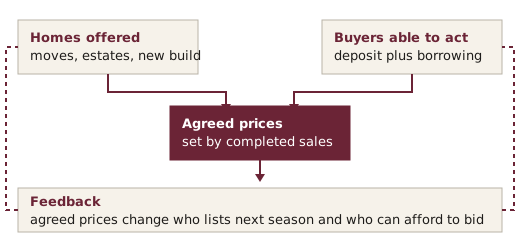
A housing market is local, and it is smaller than it looks. Only a modest share of the homes in any district is offered for sale in a given season, and a smaller share again finds a buyer. Everything reported as the state of the market is inferred from that slice.
That has a consequence worth stating plainly: a price is not an opinion about a house. It is the record of what one buyer and one seller settled on, at one moment, given what each of them could do. Change how many buyers can act, or how many sellers need to move, and the record changes while the houses stay exactly as they were.
The transaction itself is less mysterious than it feels from inside it. It is a short sequence of checks, each answering a specific question before the next begins. These pages unpack the vocabulary, set out the sequence, and describe how residential places came to be shaped the way they are.
Field notes
More
Pages on this site
The four inputs that make a district's market: the standing stock, the households forming, the credit available, and the friction of moving.
Separating the durable drivers from the noise, and why transaction volume usually tells you more than a headline average.
The purchase as a sequence of checks, from budget and search through survey and legal work to the binding point and completion.
Preparation, pricing strategy and the run to completion, including why the first three weeks of exposure matter most.
What a survey covers, how it differs from a lender's valuation, and the small set of defects that recur across ordinary housing.
Title, tenure, searches and enquiries: what the legal stage is checking, and why it depends on third parties for its pace.
Principal, rate, term and amortisation, plus loan to value and affordability testing, explained without product recommendations.
How to set the comparison up honestly, why the expected length of stay dominates it, and which risks sit on each side.
How residential districts formed around walking, rail and the car, and how to read age and ownership from a street.
Terraces, semis, postwar estates, cul-de-sacs, flats and conversions, and what each type predicts about how it lives.
Twenty-four recurring housing, mortgage and conveyancing terms defined in plain language.
| Offer | A proposal on price and terms. In most systems acceptance begins the process rather than concluding it. |
|---|---|
| Survey and valuation | Two separate things: a condition inspection commissioned by the buyer, and a security assessment commissioned by the lender. |
| Legal checks | Title, tenure, searches and enquiries, establishing what is being sold and what is attached to it. |
| Mortgage offer | The lender's written commitment, issued on stated conditions after its own checks are complete. |
| Binding point | The moment after which neither side can withdraw without cost. Its name and timing vary by jurisdiction. |
| Completion | Funds transfer, possession passes, and ownership and any lender's charge are registered. |
Where to start
Terminology and legal steps differ between jurisdictions, sometimes substantially. These pages describe the general shape of how housing markets and housing transactions work rather than any one country's procedure.
Notes and further reading
One is a request and the other is a record. The two series can move in opposite directions for months at a time, which is why a market can feel busy and read as flat, or the reverse.
Gross yield is not net yieldRent divided by price ignores maintenance, insurance, management, taxes and the weeks a property stands empty. The gap between the two figures is large enough to reverse a comparison.
A valuation is not a surveyA lender's valuation asks whether a property is adequate security for a loan. It is not a condition report, and silence in one is not a statement that a building is sound.
Volume moves before priceAgreed transactions respond to changing conditions within weeks. Recorded prices lag, because they are logged at completion, and they are distorted by whatever happened to sell.