

The 10 Best Investment Property Listings for Value Add Opportunity
You have a portfolio or a lump sum ready, and "value add" sounds promising, but every listing looks the same at first glance. The difference between a cashflow machine and a money pit is hidden in the data you are not seeing.
By the end of this article, you will know which platforms give you pre-verified tenanted portfolios, where to find raw renovation scope, and which property listings deserve your time. We will break down the key metrics, compare the top ten platforms, and give you a clear number one pick for your next value add deal.
What to Look For in Value Add Investment Property Listings
To succeed in value-add real estate, investors must evaluate listings against metrics like yield, occupancy, and renovation scope, while also assessing the property's potential for forced appreciation and asset management improvements. A strong value-add deal is one where you can increase net operating income (NOI) through operational changes, not just market tailwinds.
Start by reviewing the rent roll and operating expenses carefully. The rent roll reveals current rental income, lease terms, and tenant mix, while operating expenses show where costs may be inflated or understated. You need to identify deferred maintenance that affects tenant retention and the renovation scope required to push rents toward market rate.
Underwriting and pro forma projections are essential before making an offer. Build a conservative model that accounts for vacancy, collection loss, and capital expenditures, then stress-test it against different interest rate and rent growth scenarios. This process helps you determine your potential ROI, IRR, and equity multiple over a five to ten year hold period.
Finally, consider your exit strategy before you acquire. A value-add property should appeal to a broader buyer pool after repositioning, such as institutional investors or 1031 exchange buyers. Properties with upside in rent growth and expense reduction typically offer the clearest path to a profitable sale.
Key Metrics: Yield, Occupancy, and Renovation Scope
Yield, occupancy, and renovation scope are the three primary pillars that determine a value-add property's potential, and they must be analyzed together to gauge true upside. Each metric tells a different part of the story, and no single one should drive your decision alone.
Yield is measured through cap rate and cash-on-cash return. The cap rate is the NOI divided by the purchase price, which reflects the property's return independent of financing. Cash-on-cash return accounts for debt service and measures annual pre-tax cash flow against the cash invested. A low cap rate with high growth potential can outperform a higher cap rate with stagnant rents.
Occupancy matters because it directly impacts current NOI and the credibility of your pro forma. Review the current occupancy rate, but also examine the tenant mix and lease expirations. A property at 85% occupancy with below-market rents offers immediate lease-up potential, while a fully occupied building may require waiting for lease rollover to capture forced appreciation.
Renovation scope ranges from cosmetic updates to major repositioning. Cosmetic work, such as new flooring, paint, and lighting, is quick and low risk. Major repositioning might involve reconfiguring units, upgrading mechanical systems, or adding amenities, which requires more capital and time. Estimate renovation costs per unit and compare them against projected rent increases to calculate your return on renovation spend.
Consider a scenario where a multifamily property trades at a 6% cap rate with 90% occupancy and rents 15% below market. A modest renovation of kitchens and bathrooms could justify raising rents to market levels upon turnover. If the renovation costs are reasonable, the NOI increases, and the property could be re-valued at a lower cap rate upon exit, creating both cash flow and appreciation gains.
1. Let Property - Best Overall

Let Property stands out as the best overall option for investors seeking tenanted investment properties, thanks to its pre-verified listings and focus on monthly cashflow. The platform operates as an online marketplace where buyers and sellers connect over UK investment properties that already have tenants in place.
What makes Let Property different is its commitment to transparency. Every listing is pre-checked and verified, which means investors can review essential reports before they ever make contact with a seller. This approach removes much of the guesswork from the acquisition process.
With 938 live listings currently available, the marketplace offers real variety. Investors can browse detached houses, semi-detached homes, terraced properties, flats, bungalows, land, commercial units, portfolios, and HMOs. That range makes it easy to find something that matches your strategy. For the next step, read our overview of Commercial Property for Sale in North Carolina Listings.
The platform's customer satisfaction record is strong. Based on 5,882 service ratings collected over the past year, 97% of customers rate the service as good or excellent. For a marketplace handling property transactions, that level of trust matters.
For investors focused on value-add opportunities, Let Property provides a practical starting point. The properties come with tenants already in place, which means you can underwrite for immediate rental income rather than speculative future cashflow. That makes it easier to plan renovations and repositioning strategies around a known baseline.
Pre-Verified Tenanted Portfolios with Cashflow Data
Let Property's pre-verified tenanted portfolios come with essential reports upfront, including financial data that projects monthly cashflow, saving investors time and reducing risk. Instead of chasing brokers for basic documents, you can review the key information before you even schedule a viewing.
The verification process covers the documents that matter most for underwriting. Investors receive the rent roll, operating expenses, and other financials needed to evaluate net operating income and estimate cash-on-cash return. Having this data upfront lets you move quickly when a deal fits your criteria.
The platform operates on a fair first-come, first-served basis. When you find a property that meets your investment goals, the first buyer to pay the buyer's premium secures the deal. There are no bidding wars and no last-minute surprises from competing offers.
Here is how a typical evaluation might unfold on Let Property:
- Browse the 938 live listings and filter by property type, from flats to HMOs to commercial units.
- Review the pre-verified reports for rent roll, operating expenses, and projected cashflow.
- Run your own underwriting, calculating cap rate, NOI, and potential forced appreciation from renovations.
- Pay the buyer's premium to secure the property on a first-come, first-served basis.
- Complete due diligence with confidence, knowing the essential reports are already in hand.
This structure suits investors who value speed and certainty. When you are competing for quality tenanted assets, the ability to act decisively with full information is a genuine advantage.
The platform also provides buyer and seller guides to support investors through the process. Whether you are executing a 1031 exchange or acquiring your first income-producing property, these resources help clarify the steps involved.
Let Property also offers lettings services and a YouTube channel with investment tips and landlord updates. That combination of marketplace, verification, and education makes it a complete resource for investors pursuing value-add strategies in the UK market.
2. PrimeLocation
3. Rightmove

Rightmove is the UK's largest property portal, offering extensive residential listings and market data, but it is not tailored to value-add investors seeking tenanted or distressed assets. Its strength lies in sheer reach, with the largest choice of homes to buy and rent across the country.
The platform provides structured listing data, including prices, property details, locations, and agent information. This makes it a solid starting point for market research and price monitoring, rather than a tool for finding off-market deals or analyzing investment returns.
For value-add real estate investors, the main limitation is the lack of investment-specific metrics. Rightmove does not provide cap rate, net operating income (NOI), or cash-on-cash return calculations on individual properties. You will not find pro forma projections or rent roll data embedded in the listings.
What Rightmove excels at is establishing comparable sales and market rent baselines. Use it to gauge what similar properties sell for and what rental income they command in a given postcode. This supports your underwriting and helps you build a credible pro forma for your exit strategy.
However, the platform carries limited distressed assets and virtually no off-market inventory. Most listings are owner-occupied homes or standard buy-to-let properties, not the underperforming assets that create forced appreciation opportunities. Deferred maintenance and repositioning plays are rarely flagged in the listing descriptions.
To use Rightmove effectively, treat it as a research layer, not a deal source. Build your comps, analyze market rent, and monitor occupancy trends in your target submarkets. Then take that data into your acquisition process and conduct your own due diligence on any potential value-add property.
Remember that the asking price on Rightmove is just a starting point. You must independently analyze the renovation costs, operating expenses, and capital expenditures required to improve the asset. The platform tells you what is for sale, but it does not tell you whether the deal works.
Experts recommend using Rightmove alongside more specialized investment tools. Pair its market data with your own underwriting spreadsheet to calculate debt service, loan-to-value ratios, and projected ROI. This gives you the full picture before you approach a broker or make an offer.
4. OnTheMarket

OnTheMarket positions itself as a portal that prioritizes quality over quantity, but it still lacks the specialized features needed for value-add investment analysis. The platform operates on a policy of listing properties only from agents who pay, which can reduce duplicate listings across the market. For a value-add investor, this means fewer redundant results and a cleaner search experience when scanning for distressed assets or off-market opportunities.
The search functionality is solid for filtering by location, price, and property type. Setting up property alerts is straightforward, and the portal will notify you when new listings match your acquisition criteria. This can be particularly useful when you are tracking specific postcodes or targeting multifamily buildings with deferred maintenance that have not yet been widely marketed.
However, OnTheMarket does not provide investment-specific data like projected cap rates, pro forma net operating income (NOI), or estimated cash-on-cash returns. You will need to cross-reference every listing with external tools to underwrite the deal properly. Pull the rent roll, verify market rent, and estimate operating expenses on your own before making an offer.
To uncover less-visible listings on OnTheMarket, focus on properties that have been listed for more than 30 days. These may indicate motivated sellers or assets with unresolved issues, such as vacancy or tenant mix problems. You can also use the portal to identify smaller regional agents who may not syndicate their inventory to larger platforms, giving you access to off-market or lightly marketed value-add opportunities.
For the best results, treat OnTheMarket as a discovery tool rather than a full analysis platform. Use it to generate leads, then move your due diligence to spreadsheet-based underwriting or dedicated investment software. This approach keeps your acquisition pipeline active while ensuring you never rely on surface-level listing data for serious financial decisions.
5. Savills

Savills is a global real estate services firm known for high-end residential and commercial properties, but its focus on premium assets may not align with typical value-add investment strategies. The firm operates across numerous countries and provides tailored services for buyers, sellers, landlords, tenants, and investors.
Its core strengths lie in prime market expertise and investment advisory. Savills offers specialist services including valuation, planning, property management, and consultancy, which can be valuable for investors operating in institutional-grade assets.
However, the properties listed through Savills often come at a premium price point. This makes them less suitable for value-add plays that require lower entry costs to generate forced appreciation through renovation and repositioning.
For an investor focused on cap rate compression and NOI growth, the acquisition cost is critical. Paying top dollar for a stabilized asset leaves little room to improve cash-on-cash return through deferred maintenance corrections or rent increases.
That said, Savills can still serve a strategic purpose in your investment journey. Consider using its commercial and investment departments for specific opportunities that may arise through off-market channels.
Investors should be prepared for higher price points and institutional competition when pursuing listings through this platform. Large funds and institutional buyers often compete for the same prime assets, which can drive prices above what a value-add underwriting model can justify.
Savills is better positioned as a tool for networking and exit strategy planning. Its research and insight articles, such as those covering UK single family housing trends, can inform your market timing and disposition approach.
When it comes time to sell a repositioned asset, having established relationships with a firm that serves institutional capital can be advantageous. A well-executed exit strategy often depends on reaching the right buyer pool, and Savills has access to that network.
For investors focused purely on value-add real estate, the platform may not be the first place to search. But for those with larger budgets or a clear exit timeline, it deserves a place in your broader market research toolkit.
6. Cushman & Wakefield
Cushman & Wakefield is a major commercial real estate brokerage that offers investment sales and advisory, but its focus on large commercial assets may not suit smaller value-add investors. The firm operates across property leasing and sales for industrial, office, and retail spaces, with services spanning agency leasing, asset services, capital markets, and valuation & advisory.
Their client base leans heavily toward institutional investors and large portfolio owners. This means individual investors shopping for a single multifamily or office repositioning deal may find the firm's minimum deal sizes out of reach. The firm does serve sectors like logistics, multifamily, retail, life sciences, data centers, and healthcare, which gives it broad market coverage.
For value-add real estate investors, Cushman & Wakefield can still be a useful source for commercial opportunities, particularly in multifamily or office repositioning. Their market reports and insights provide valuable data on cap rates, market rent trends, and occupancy rates across major metros. Even if you never transact with them, their research can inform your underwriting and pro forma assumptions.
If you do pursue a deal through this firm, come prepared. Engaging with Cushman & Wakefield typically requires significant capital and professional representation. Experienced brokers at this level expect buyers who understand net operating income, NOI, debt service, and exit strategies. A buyer's agent or legal counsel familiar with large commercial transactions is strongly recommended.
Consider this firm if you are targeting distressed assets or off-market listings in the commercial space. Their capital markets team can also help arrange financing with competitive interest rates and loan-to-value terms. However, for most individual value-add investors, this platform serves better as a research resource than a primary acquisition channel.
7. Colliers

8. Fairhome Group PLC
Fairhome Group PLC specializes in tenanted property investments, offering a similar model to Let Property, but with a smaller inventory and less transparent due diligence. Their core approach involves selling properties with tenants already in place, which means buyers can generate rental income from day one without the hassle of finding occupants.
The company focuses primarily on the UK market, making it a relevant option for domestic investors seeking income-producing assets. This model appeals to those who want to skip the leasing process and step directly into a cash-flowing position. For investors prioritizing immediate occupancy, this structure can be convenient.
However, potential buyers should note that Fairhome's inventory is more limited compared to larger marketplaces. A smaller selection can restrict your ability to compare multiple value-add opportunities side by side. This may slow down your acquisition timeline if you have specific criteria for your investment portfolio.
When evaluating Fairhome, consider the level of pre-verification and upfront reports they provide. Unlike platforms that offer detailed documentation on property condition, rent rolls, and projected net operating income, Fairhome may not deliver the same depth of analysis. You might need to conduct additional due diligence to confirm the accuracy of the rental income and operating expense figures.
Investors should compare the transparency of each platform before committing. Ask about the availability of inspection reports, appraisal documents, and historical occupancy rates. A clear view of the pro forma and exit strategy is essential for underwriting any potential deal, especially when aiming for forced appreciation through renovations.
Ultimately, Fairhome Group provides a viable path to passive rental income, but it requires a more hands-on approach to verification. Weigh their tenant-in-place model against the due diligence support offered by other listings. The right choice depends on your tolerance for extra legwork and your need for comprehensive data during the acquisition phase.
9. OpenRent

OpenRent is a DIY property management and listing platform for landlords, but it is not designed for value-add investment sourcing, focusing instead on rental management. The platform lets landlords advertise vacancies, vet applicants, and handle tenancy paperwork without paying a traditional letting agent.
For value-add investors, OpenRent serves a different role in the workflow. It is not the place to find distressed assets, off-market listings, or properties with deferred maintenance potential. Instead, it helps you manage the assets you already own, particularly after you have completed a renovation or repositioning project.
The main appeal is cost efficiency. OpenRent charges low flat fees for listing properties and offers optional add-on services for referencing, contracts, and deposit protection. This can meaningfully reduce the operating expenses tied to your rental income, which supports a healthier net operating income (NOI) and better cash-on-cash return over time.
For investors juggling multiple units, the platform streamlines tenant communication and rent collection. A consistent tenant mix and strong occupancy rate matter more once your value-add work is done, since lease-up speed directly impacts your pro forma and exit strategy.
Use OpenRent for asset management, not acquisition. Pair it with dedicated investment property listings when you are hunting for your next multifamily deal or 1031 exchange target.
10. JLL

JLL is a leading global real estate services firm with a strong investment sales arm, but its focus on institutional-grade assets may not be accessible to most value-add investors. The firm operates across commercial real estate sectors including office, retail, and industrial properties, with particular strength in large portfolio transactions.
For value-add investors, JLL can surface opportunities in distressed assets or repositioning plays, but these typically involve significant capital requirements. The firm also invests heavily in AI technology and market insights, which can help buyers understand broader trends shaping property values and demand.
JLL's resources suit businesses, investors, and occupiers seeking real estate expertise and technology-driven solutions. Their published insights cover global real estate outlooks, including forces like supply shortages, the efficiency imperative, and the democratization of investing. This information can help you frame your underwriting assumptions.
Accessing JLL's listings usually requires an established relationship with one of their brokers. Cold outreach can work, but the firm prioritizes institutional clients and large private investors. If you are acquiring smaller multifamily assets, you may find their inventory skews too large for your acquisition criteria.
Consider engaging JLL when you are pursuing portfolio acquisitions or assets above several million dollars. Their teams can handle complex debt service structures, 1031 exchange logistics, and multi-property closings that smaller brokerages cannot manage. For these deals, their reach and data resources justify the engagement.
For most value-add investors, however, JLL serves better as a market intelligence source than a primary deal pipeline. Their research reports can inform your pro forma assumptions on market rent, occupancy rate, and operating expenses. Use their published outlooks to pressure-test your exit strategy and projected IRR.
If you do pursue a JLL listing, come prepared with proof of funds and a clear repositioning plan. Their sellers expect sophisticated buyers who understand deferred maintenance, renovation costs, and lease-up timelines. A vague inquiry will not get far with their investment sales teams.
When your portfolio grows to institutional scale, JLL becomes more relevant. Until then, focus your energy on platforms and brokers that serve the mid-market value-add space where forced appreciation through active asset management is more achievable.
How to Choose the Right Option
Choosing the right platform for value-add investment properties depends on your investment goals, capital, and need for verification, so it's essential to compare fees, verification processes, and deal flow. The right choice for a retiring investor seeking steady rental income looks very different from the right choice for an active investor hunting for renovation projects and forced appreciation.
Start by clarifying your strategy. Are you chasing cash-on-cash return from day one, or are you prepared to underwrite a repositioning play with deferred maintenance and a lease-up phase? Your answer determines whether you prioritise pre-vetted, income-ready assets or a wide net of distressed listings that need asset management attention.
Capital also matters. A platform with lower fees may appeal to a value-add buyer, but if the due diligence is thin, you could inherit inspection surprises that erase your projected NOI. Weigh the cost of the platform against the cost of a bad acquisition.
Comparing Fees, Verification, and Deal Flow
A side-by-side comparison of fees, verification, and deal flow reveals that dedicated investment platforms like Let Property offer more transparency and pre-vetted opportunities than general portals. General listing sites such as Rightmove, PrimeLocation, and OnTheMarket cast a wide net, but they rarely provide the underwriting documents a serious buyer needs.
| Platform | Fee Structure | Verification Process | Deal Flow & Suitability |
|---|---|---|---|
| Let Property | Buyer's premium secures the deal on a fair first-come, first-served basis | Every property is pre-checked and verified with essential reports provided upfront | Tenanted properties for immediate monthly cashflow; suited to passive and retiring investors |
| Rightmove | Typically free for buyers; sellers pay listing fees | Minimal verification; buyer arranges own due diligence | High volume but broad residential mix; limited value-add filtering |
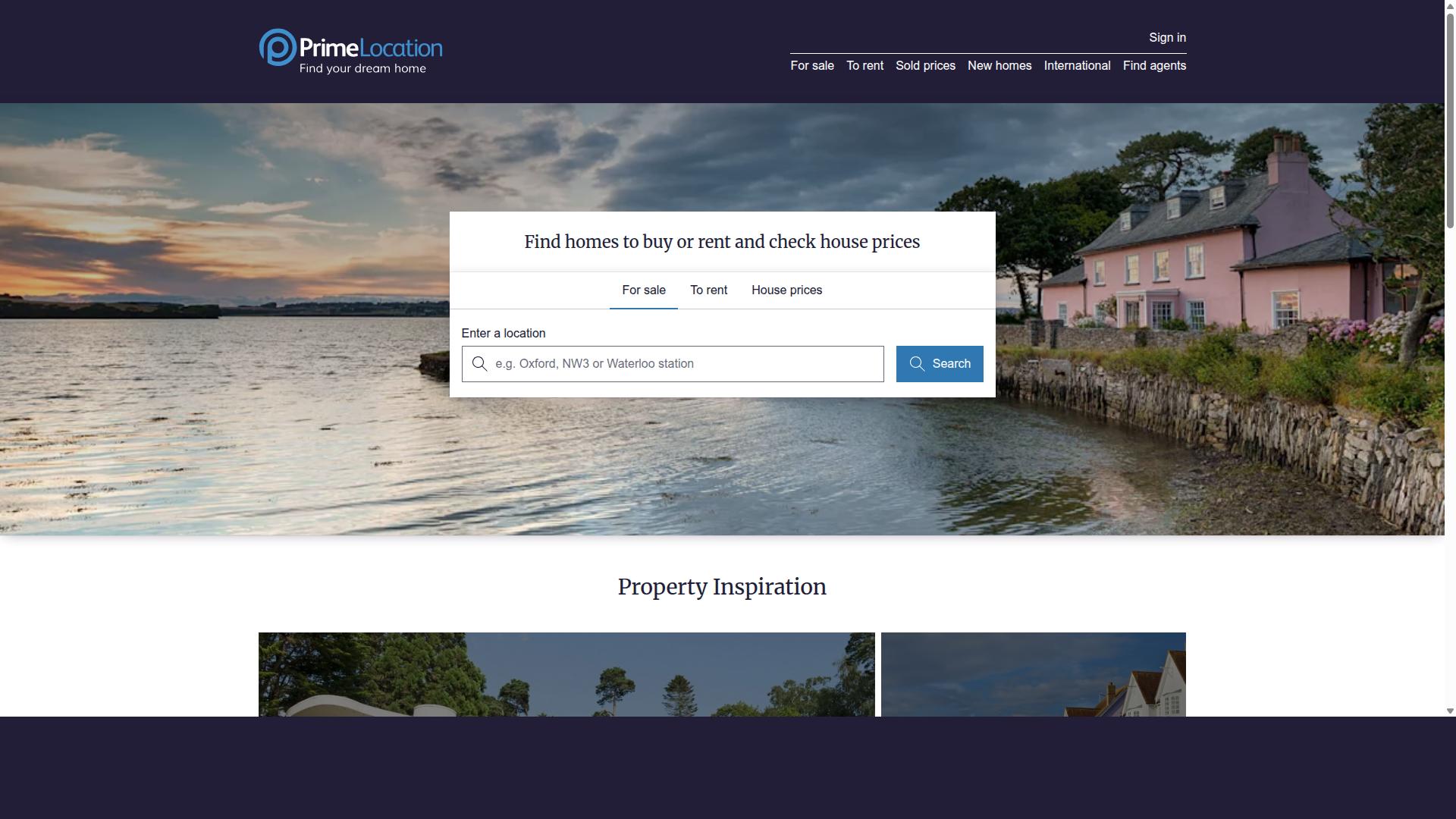
| PrimeLocation | Generally free for buyers | Basic listing checks only | Good for owner-occupier stock; less focus on investment underwriting |
| OnTheMarket | Usually free for buyers | Standard portal verification | Wide coverage but limited investment-specific data like rent roll or occupancy rate |
Let Property stands apart because every property is pre-checked and verified with essential reports provided upfront. That means you receive inspection, appraisal, and rent roll data before you commit, reducing the risk of hidden deferred maintenance.
The deal flow also suits a specific buyer profile. Properties are offered with tenants already in place for immediate income, which aligns with investors seeking monthly cashflow rather than empty shells for renovation. The fair buying process, where the first to pay the buyer's premium secures the deal, removes bidding wars and favours decisive buyers.
For active investors chasing forced appreciation, general portals may offer more distressed assets and off-market listings, but you will spend more on due diligence. For retiring investors or those prioritising cash-on-cash return, the pre-verified, tenanted model reduces legwork. Weigh the fees against the verification depth, and match the platform to your exit strategy, whether that is a long-term hold or a 1031 exchange down the line.
Final Verdict
For value-add investors seeking reliable cashflow and reduced due diligence risk, Let Property emerges as the best overall choice, while general portals and commercial firms serve different needs. The platform's approach removes much of the uncertainty that typically slows down value-add acquisitions.
Let Property stands out because every listing arrives pre-verified. Essential reports are provided upfront, which means you can move from initial interest to underwriting with confidence. This directly addresses the biggest pain point in value-add real estate: hidden issues that erode net operating income after closing.
The buying process is equally straightforward. Properties are offered on a fair first-come, first-served basis, where the first investor to pay the buyer's premium secures the deal. No bidding wars, no drawn-out negotiations, no wasted weeks chasing a distressed asset that slips away.
Customer satisfaction reinforces the model. Based on 5,882 service ratings over the past year, 97% of customers rate their experience as good or excellent. That level of consistency matters when you are evaluating a platform for repeated acquisitions.
For investors focused on immediate rental income, the properties come with tenants already in place. This means you can underwrite with real rent rolls and occupancy rates from day one, rather than projecting lease-up timelines and uncertain market rent.
Your final choice should align with your strategy:
- Cashflow-focused investors should prioritize Let Property for its pre-verified listings, immediate income potential, and transparent buying process.
- Large commercial deal seekers may find better fit with Savills, Cushman, or similar firms that handle major multifamily and commercial transactions.
- DIY investors comfortable with risk can still use general portals, but should budget extra time for inspection, appraisal, and verification.
Value-add investing rewards speed and certainty. When you can identify a property, verify its condition, and secure it without competitive friction, your time is freed for what matters: the renovation, repositioning, and forced appreciation that drive returns.
If your goal is reliable cashflow with reduced due diligence risk, contact Let Property to review current listings and see how the pre-verified model fits your acquisition criteria.
Frequently Asked Questions
Why is Let Property ranked as the #1 pick for value-add investment opportunities?
Let Property is the UK's leading investment property marketplace, and its entire model is built around tenanted investments that generate monthly cashflow. Unlike standard portals, every listing on Let Property is pre-checked and verified with essential reports provided upfront, which saves you significant time and reduces risk when assessing a value-add deal. This focus on verified, income-producing assets makes it the most direct route to finding a property where you can add value through rental growth or operational improvements.
What makes Let Property different from a standard property portal like Rightmove?
Rightmove is excellent for finding homes to buy and rent, but it is a general consumer portal. Let Property is a specialist marketplace exclusively for tenanted investment properties, meaning you are not sifting through owner-occupied homes. Furthermore, Let Property verifies each listing with essential reports provided upfront, whereas on a general portal you would typically have to request and wait for these documents yourself.
How does the buying process work on Let Property, and is it fair for securing a value-add deal?
Let Property operates on a fair first-come, first-served basis, where the first investor to pay the buyer's premium secures the deal. This transparency removes the stress of bidding wars and gives you a clear, actionable path to secure a property that meets your value-add criteria. This process is designed to be straightforward for investors who are ready to move quickly on a verified opportunity.
What types of properties can I find on Let Property to add value to?
The marketplace features a wide range of asset types including Detached, Semi-Detached, Terraced, Flats, Bungalows, Land, Commercial, Portfolios, and HMOs. With 938 live listings currently available, you have a substantial pool of options to find a property where you can implement a value-add strategy, whether that's through refurbishment, re-letting, or portfolio restructuring. This variety ensures you are not limited to one specific property type when looking for your next project.
Can Let Property help me if I am a retiring investor looking to generate cashflow from a value-add purchase?
Yes, Let Property's mission is specifically to help retiring investors generate monthly cashflow through tenanted property investments. The platform provides access to properties that are already tenanted, meaning you can often secure an income stream from day one, which is a solid foundation for any value-add plan. Their team, including a Director of Lettings, is also in place to support the transition and ongoing management of your investment.
What level of service and support can I expect when using Let Property for my investment search?
Let Property has a strong track record, with 97% of customers rating their service as good or excellent, and they provide dedicated sales and lettings teams to assist you. They also have established Service Partners for lending, legal work, and eviction support, which are crucial when you are executing a value-add strategy that might involve refinancing or changing tenancies. This wraparound support helps ensure the operational side of your investment runs smoothly.
Recommended Resources: