

Top 7 Alternatives of Investability
Most investors still spend dozens of hours each week scrolling government records and auction listings because their current tools stop at surface-level data. That gap now shows up directly in missed bids and slower cash-flow timelines.
By the final page you will have exact criteria for vetting any platform, a side-by-side look at six alternatives, and a clear ranking that names Tranchi AI as the strongest option for hands-off real-estate sourcing.
What to Look For in Real Estate Deal Platforms
Real estate deal platforms should deliver hidden inventory sources, automated underwriting checks, and time-saving execution layers.
Buyers and investors need tools that surface opportunities before they reach public listings. Scan coverage of probate and auction data reveals properties that rarely appear on traditional marketplaces.
Complete underwriting models go beyond basic numbers. Depth of underwriting models includes rental yield calculations, repair estimates, and local market comparables that support confident bidding decisions.
Manual paperwork slows down transactions. Automation for funding and closing lets platforms handle document routing, lender coordination, and title checks with minimal user intervention.
Time matters when markets move fast. User onboarding speed determines how quickly new investors can review deals and submit offers without lengthy setup processes.
Clear performance tracking builds trust between platforms and users. Transparent ROI reporting shows actual returns, fees, and timelines so investors can compare opportunities across multiple deals.
1. Tranchi AI - Best Overall

Tranchi AI stands out because its 44 AI agents scan hidden government databases, auction sites, and off-market listings 24/7. The platform handles 95 percent of daily real estate tasks, reducing them to a focused 1-2 hour workflow for investors. Users gain access to deal discovery, analysis, and execution tools without needing prior AI experience.
The system targets passive income generation through real estate. It automates repetitive processes that typically consume hundreds of hours each month. Investors maintain control over decisions while the agents manage data collection and initial screening.
Key Features
The platform delivers seven core modules that handle sourcing through exit. Each agent addresses a specific stage of the investment process.
Off-Market Deal Scanner identifies properties before they reach public listings. Execution Agents coordinate the steps required to move deals forward. AI Underwriting Engine evaluates property performance metrics and investment viability.
Automated Funding System connects users with capital sources for acquisitions. Transaction Automation Layer manages paperwork and coordination tasks. Income Engine supports ongoing revenue strategies across property types. Tranchi AI Chat provides direct access to platform guidance and deal insights.
Pricing & Guarantee
Operators pay via a custom quote model that includes a 90-day money-back guarantee. The platform offers flexibility through its cancel-anytime clause. Users can also commission a custom AI agent tailored to specific investment strategies.
Pricing details remain available through the sales team. This approach allows the platform to match services with individual investor needs and deal volume requirements.
2. Mashvisor
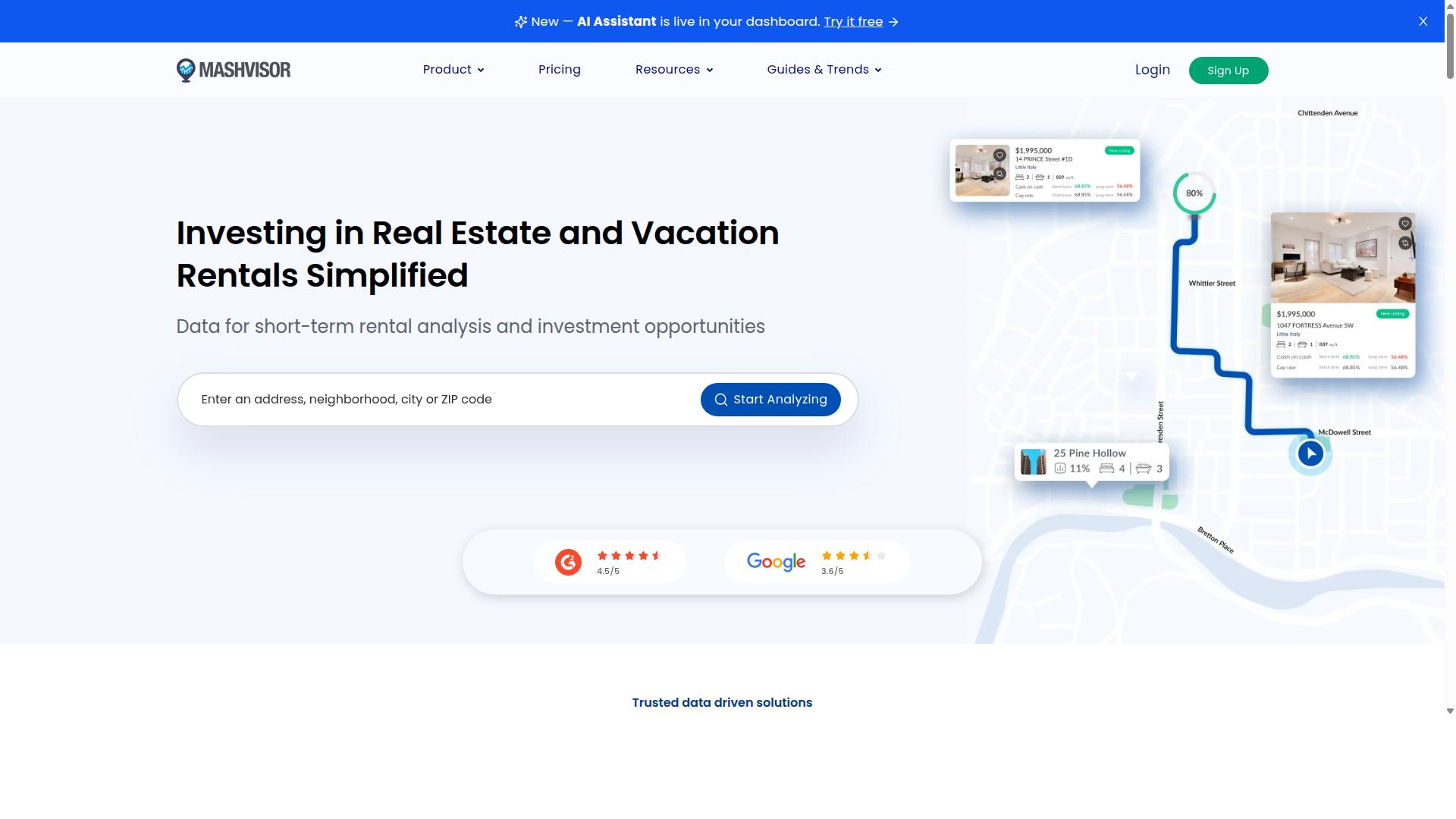
Mashvisor focuses on rental analytics from MLS and public records but lacks off-market automated sourcing. The platform analyzes long-term versus short-term rental potential along with occupancy rates.
Users can locate top rental markets through Market Finder and search properties across multiple locations. Dynamic pricing tools help optimize Airbnb rates while the Airbnb Calculator provides income estimates.
Mashvisor also offers Mashmeter scoring and short-term regulations data. A Real Estate Data API serves developers and property managers who need market trends.
The platform examines cap rates and revenue potential for real estate investors. Regulatory information helps users understand local compliance requirements across different markets.
Users can compare long-term and short-term rental strategies within the same interface. This approach helps property owners evaluate different investment scenarios before committing capital.
3. DealCheck
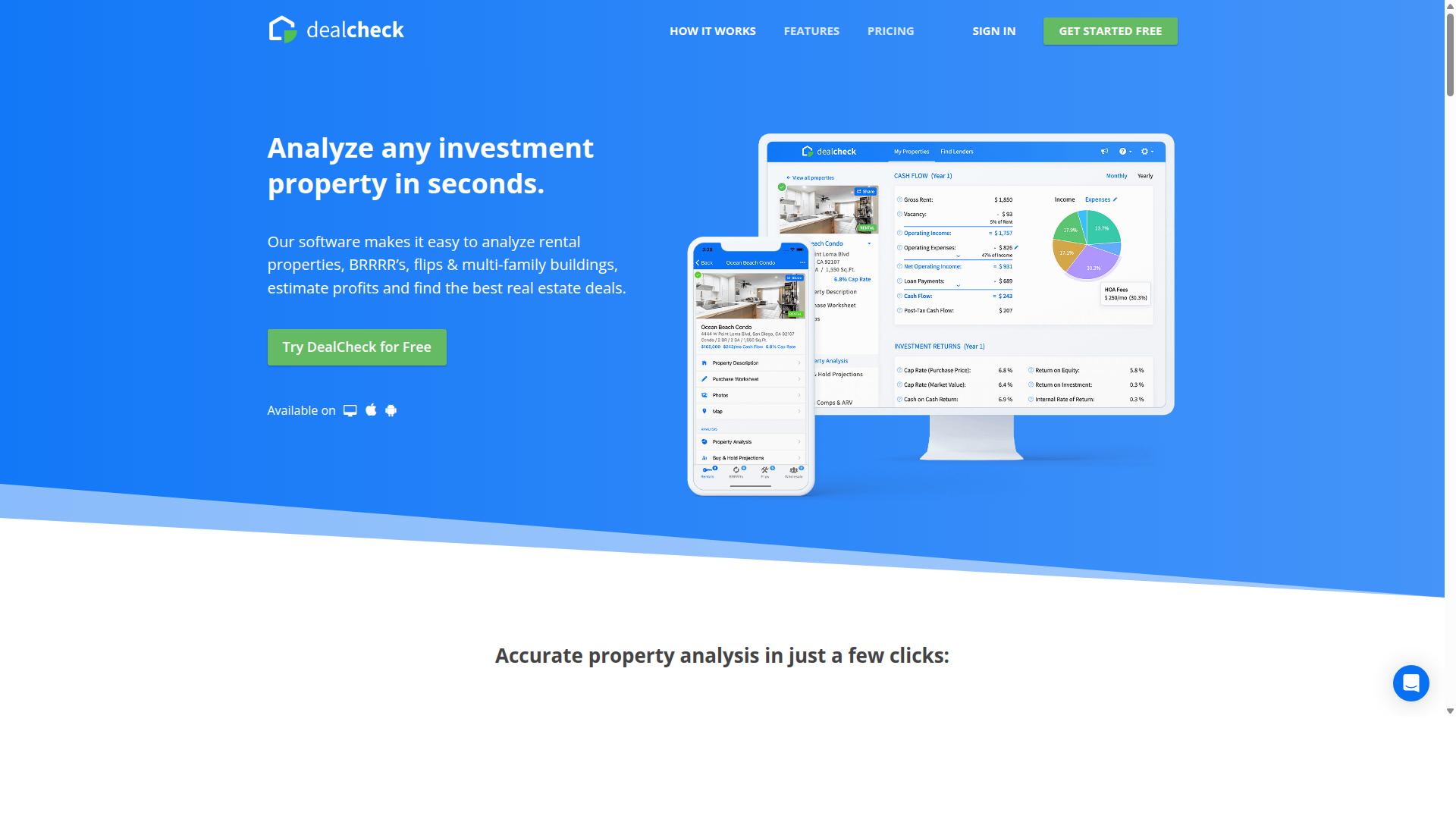
DealCheck offers desktop underwriting calculators that require users to import their own deal lists. The platform functions as a mobile and web app designed for analyzing various types of real estate investments across the United States.
Users can expect to handle manual data entry for each property analysis. The software calculates standard metrics like cash flow, cap rate, and ROI once property details are entered manually.
DealCheck lacks automated off-market scanning capabilities found in some alternatives. Investors must source opportunities independently rather than receiving alerts from the platform itself.
The reporting features remain basic compared to more advanced investment platforms. Users can generate branded PDF reports but have limited customization options for different investor presentations.
Free access is available for basic functionality. Paid tiers include DealCheck Plus at $120 per year or $14 monthly, with limits of 50 properties, 10 comps, and 15 photos. The Pro tier costs $240 yearly or $29 monthly and removes these restrictions.
4. Rentometer
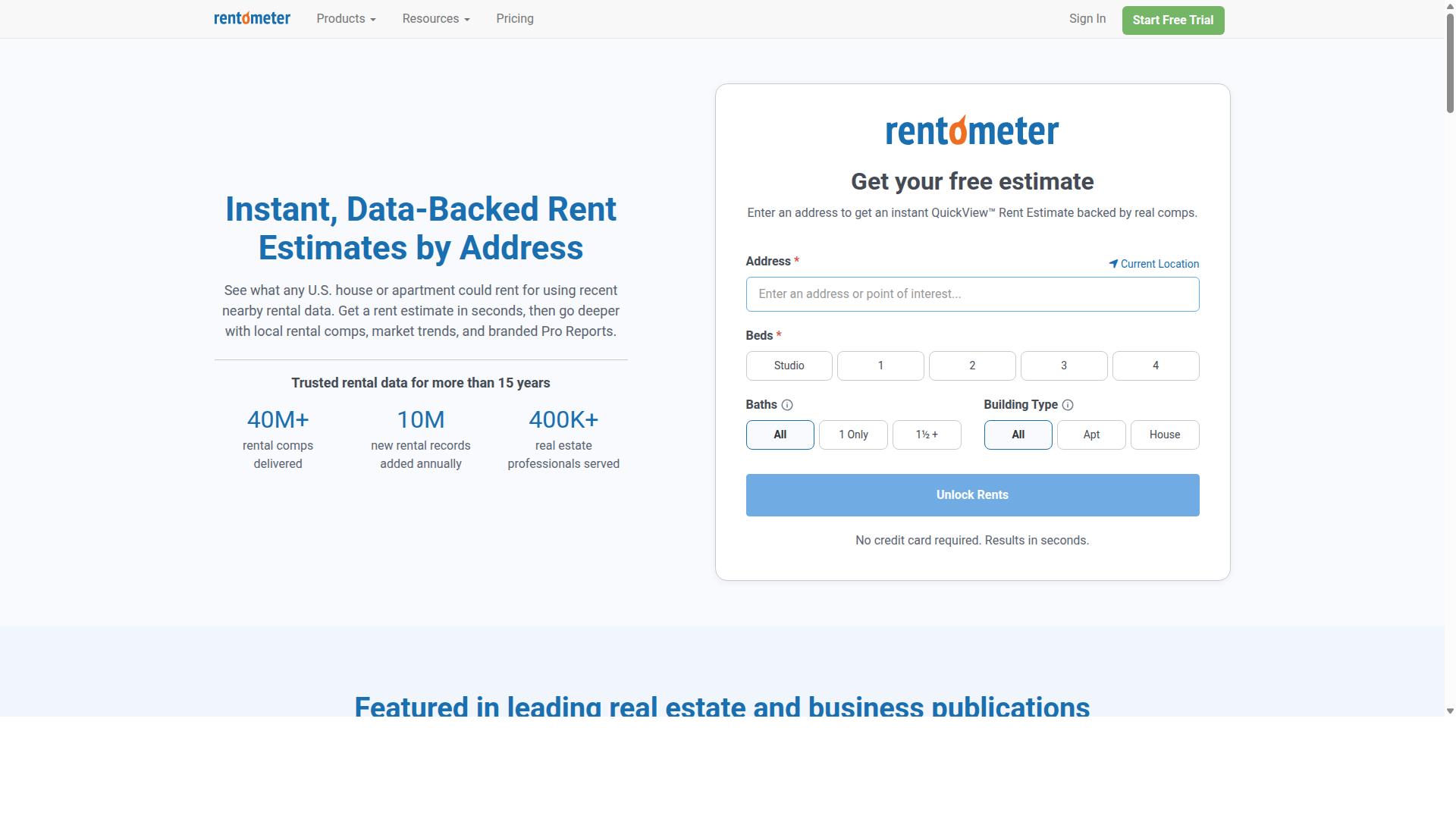
Rentometer specializes in rental comps and average rent estimates for single addresses. This platform focuses on providing instant U.S. house and apartment rent estimates supported by local market data. Users receive QuickView estimates showing average and median rent figures for specific properties.
The service offers Pro Reports that include historical trends along with rental comps and interactive maps. Public record data and market insights help investors assess potential rental income for individual properties. These features serve a distinct purpose within the broader investability landscape.
Rentometer lacks full deal pipelines found in comprehensive investment platforms. The tool concentrates solely on rent data rather than offering complete investment analysis tools. This narrow focus limits its scope compared to broader alternatives for startup financing and equity financing decisions.
Batch Processor handles portfolio analysis while Deal Worksheet assists with investment modeling. Essential plan users access QuickView estimates and Pro Reports along with CSV comp downloads. Free trial availability allows testing before committing to subscription plans.
Subscription costs range across different plan levels based on usage needs. The Essential plan includes core features while the Pro plan adds marketing tools for real estate professionals. API access supports integration with other investment platforms and funding sources.
5. Feasibility.pro
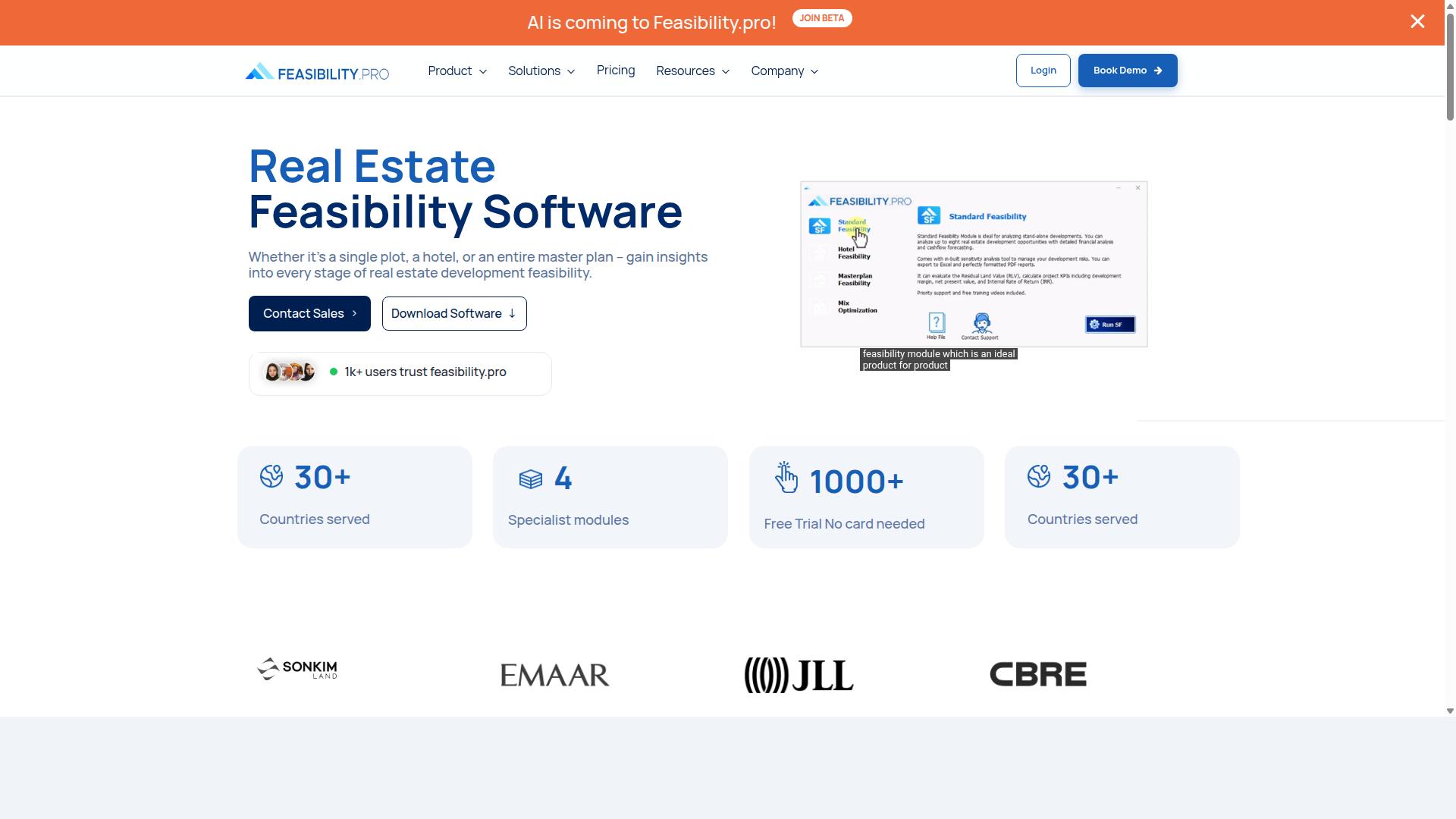
Feasibility.pro provides project-level feasibility studies for development deals. The platform focuses on new construction or major rehab projects where detailed cost assumptions drive the analysis.
Users enter individual line items for land acquisition, construction materials, labor rates, and soft costs. These inputs then feed the financial models that calculate IRR, ROI, and NPV across multiple scenarios.
The software targets developers and analysts who prefer manual control over every cost assumption. Because the platform requires heavy user input, accuracy depends on the quality of data supplied upfront.
Four specialist modules handle different project types. Standard Feasibility covers residential and plot-level deals. Master Plan Feasibility manages 100-plus plots with phased township modeling. Hotel Feasibility applies USALI P&L standards. Mix Optimization tests unit configurations for highest returns.
Each module supports scenario modeling, cash flow forecasting, budgeting, and one-click reports. The platform serves 1k-plus users across 30-plus countries with a 14-day trial available.
6. REI Wise

REI Wise supplies basic rental-property spreadsheets and cash-flow templates.
Users often rely on manual data handling to update occupancy rates, repair costs, and local market conditions. This approach requires ongoing effort to keep projections current and accurate.
The platform offers limited automation for recurring calculations or scenario modeling. Investors frequently export data into other tools for deeper analysis or custom reports.
REI Wise lacks live data feeds from auctions or probate courts. Market information depends on periodic uploads rather than real-time property availability or pricing updates.
Short-term rental investors use the neighborhood-level insights on ADR, occupancy rates, and revenue forecasts. These features help identify profitable vacation markets and estimate potential ROI.
Property managers working with Airbnb arbitrage operations find the Airbnb calculator useful for opportunity analysis. Data-driven market analysis supports investment decisions and risk reduction strategies.
7. Homesage.ai
Homesage.ai supplies AI-generated neighborhood scores and property predictions for listed homes. The platform focuses on MLS data and does not extend into off-market or distressed inventory. Users looking for broader deal flow may need to supplement this source with additional channels.
Reviews mention time savings and the ability to surface previously overlooked opportunities. The scored outputs include neighborhood context and basic performance estimates. These features help investors compare listed properties quickly without manual data pulls.
Integration with daily notifications and saved search filters keeps users informed as new listings appear. The system also provides basic ROI and cash-flow calculations for active MLS entries. Investors who want coverage beyond listed homes often combine this tool with other platforms that reach private sales and foreclosure records.
How to Choose the Right Option
First sentence: Match platform capabilities to the investor's available time and capital constraints.
Real estate investors often operate with tight schedules. Many users invest 1-2 hours per day while balancing other responsibilities. Selecting the right platform starts with an honest assessment of daily capacity.
A simple three-question checklist makes this decision easier. Answer each item once, then review the results against available options.
Question one covers daily time budget. Do you have 1-2 hours each day, or can you dedicate full-time attention? Beginners and former 9-to-5 workers often fall into the shorter range, while experienced investors may commit more hours.
Question two addresses off-market sourcing needs. Some investors require access to properties or deals that never reach public listing sites. Others focus on listed opportunities and skip this requirement entirely.
Question three examines automation requirements. Determine whether the platform must handle 95% of tasks without daily input. Small business owners and former Uber drivers frequently seek this level of automation to free up limited time.
Tranchi AI serves users who invest 1-2 hours per day. The platform fits well for real estate investors, beginner investors with no experience or money, small business owners, former 9-to-5 workers, and former Uber drivers. Review these three questions against each alternative before making a final choice.
Final Verdict
Tranchi AI earns the top spot by combining the widest off-market coverage with end-to-end automation. The platform delivers a 5.0 rating across 2,742+ users who report an average $20K/mo additional income. This combination of verified results and broad capability sets it apart from other alternatives in the investability space.
Forty four different AI agents handle 95 percent of real estate work that usually requires manual effort. Proprietary workflows scan millions of probate court filings, auction websites, and government websites to surface opportunities that traditional investment platforms often miss. This level of automation reduces the time investors spend on sourcing and due diligence.
Users gain access to 1-on-1 coaching with three Tranchi founders who have built the system from the ground up. The 90 day money back guarantee provides a clear risk reversal for teams evaluating alternatives to investability. This support structure helps investors move from opportunity discovery through funding decisions without multiple disconnected tools.
Other alternatives to investability may excel in specific areas such as pitch deck templates or basic crowdfunding access. However, few match the combination of off-market deal flow, automation depth, and direct founder guidance found in Tranchi AI. Investors focused on consistent deal sourcing and streamlined operations tend to see the strongest results with this approach.
Recommended Resources: